12.21.2006

turn

I usually don’t listen to NPR after Marketplace is over. Not that I have anything against Afro-pop, it’s certainly better than the horrid Baroque selection they play during the day on KUAC. Around ten last night, I decided I needed some dishwashing music. This is a task I usually can’t get through without some kind of background noise (usually Seeger Sessions or some old Dylan) but when I powered up the stereo, NPR piped through with some not-too-annoying Christmas music. I shrugged and left in on. We finally put up holiday lights last night, after all. Just as I was finishing the dishes, the DJ signed off with her “favorite Christmas song of all time.” When the drunken country drawl and teeth wrenching steel guitar twang came through, I was suddenly filled with some serious Christmas cheer. It was a live recording of Keen’s “Merry Christmas From The Family,” compete with a stadium full of drunk southerners screaming along with the chorus. It is truly a white trailer-trash classic, and always reminds me that no matter how bland my accent gets, I was born in the Republic of Texas and that doesn’t come out in the wash.

We are headed there to thaw out next week. I am looking forward to the sunshine. When we moved here, I was worried about two things: Cold and Dark. Honestly, the cold hasn’t been that bad. Besides giving you a serious adrenaline rush, -28 (we were expecting -40 by now, Thanks Global Warming) and making you hack like a terminal TB patient when trying to breathe, it is certainly livable. You come inside and park by the heater. Eventually you do stop shivering. Given this early success, I thought the dark would prove no big deal, either. I cheerily posted about the short days and low solar profile over at NFSC back in November. Two weeks ago, though, we stopped getting any direct sunlight in the cabin at all. And then it got overcast. The last two weeks have been a haze of grays and blues. The sun supposedly comes up around eleven. It lights the sky but nothing on the ground, and isn't visible from where we are. It heads down again sometime before three. I could (and can) feel that lack in a thorough and fundamental way that I am still having trouble pinning down. It’s trying to catch your breath after being under water for too long; even with your nose and mouth clear, there is not enough air.

But today is Solstice, the Long Night. The sun will rise at 10.48 and go down again at 2.49. At sunset this evening, everything will turn. It will send us into 21 hours and 19 minutes of night. Tomorrow, the sun will hang above the mountains for nine extra seconds. Saturday will give us twenty nine more. By mid January we will be gaining nearly ten minutes of light every day. There is so much hope in nine seconds.

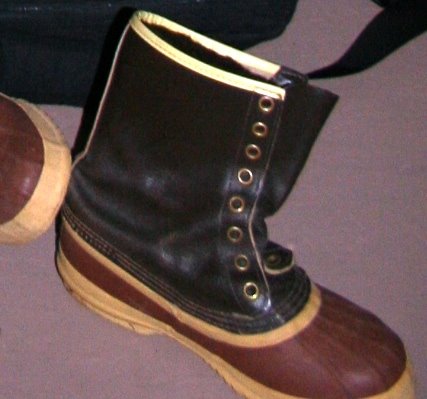
Thinking about today brought me back to Summer Solstice. We have come so far from that long, rainy day, from watching a perfect sunset, ourselves perched on the rippling back of the Atlantic. We are nearly ten months married. We have put over 10,000 miles on the car. There is now an orange kitten and a line of heavy boot liners drying by the heater. Numbers for take-out Chinese and pizza, the menu of a Thai place we haven’t tried yet, a cup of quarters on the windowsill for laundry. I woke up this morning to discover the door had frozen closed. I woke Peter to break it open so the dog and I could go out.

It is light now, at eleven thirty, the sky pink in perpetual dawn, clouds broken up enough that some baby-blue sky is showing, trees blanketed thick with the snow we got last night. I am glad to fly down to Texas, to laugh with family and eat spectacular Mexican food and be chased by my uncle’s errant cattle. I need the thaw, the long late nights with my sister, the time with friends who have known us longer than the five months we’ve been here. But I will be glad to get back to this life, with all its uncertainties. There will be more light then, after all.

11.28.2006

pacing

Back in high school, I was on the cross country team. We would run ‘interval’ trainings, doing a specified pace over a short course and (after a rest) repeating it, to exhaustion. The goal was to hit the exact same time – to the second – each round. At first, it was easy to hit the mark. The challenge was slowing down to get the timing right. In the middle, it became a game hitting the second on the nose. By the end, it was about pushing tired legs and burning lungs hard to get there without going over. We would run in groups with other runners bunched by speed. In my group, I was always the pacer. I had an innate sense of how fast we were going, and always had us in within a second or so of our goal. I took quite a bit of pride in my ability to hit these arbitrary marks, set by coaches with championship dreams dancing across their vision. In a way, I had to take pride in my good timing. I made last place in every single race I ran the first two years.

I only wish I ran, anymore. I make plans to start again, and my shoes sit perpetually by the front door. It is cold here, and starting a running program from scratch when my eyelashes freeze together if I am outside for more than five minutes is a little more than I am willing to deal with at this point. I think my sense of pacing has gone too.

I am not proud of this, and not just because my generation’s demand for instant gratification is grounds for much scorn from our elders. We want what we want now, and fast, and damned if that means there won’t be any for later. I try to pretend I am above all this, but I have been bitten by the gratification bug and at this point the wound is rather infected.

Two things I’ve done recently clued me into how far I have strayed into this way of thinking.

The first is my new exploration of Yoga. I’m taking a class in the Iyengar method, which for the (as I) uninitiated, involves slow movements, a focus on balance and form and posture and breath. It is not, in the traditional American sense of the word, a workout. I do not leave the studio limp and depleted, clutching a Gatorade for dear life. I usually leave feeling limber and peaceful and don’t need to hit the showers before going out in public. After my second class, I mentioned to Peter that I finally understood why I had never been able to ‘do’ Yoga from books. I was always in too much of a hurry:

I examine the instructions and picture for Mountain Pose.
I think, “Ok. You stand up straight with your feet a little apart.”
I stand up straight with my feet in the appropriate position.
I walk back to the book for the next pose.
I don't get much out of it.
I wonder why?

In class, we spend five minutes getting into “Mountain Pose” (which involves a lot more than standing up with your feet apart, I have learned) and return to it several times over the course of evening. We spend lots of time adjusting hands and spines and chins. When I bring these things home I find I am still rushing. It is hard for me, straddling the kitchen rug, to hold a pose for five breaths, much harder to move between poses with the slow deliberation forced on me by the careful pacing of the class. I want to do the thing, have it done and move one. The thing is, I enjoy and get more out of the yoga class than I have yet to manage in the cabin.

The second practicum in pacing has been through pottery class I am taking at a studio in North Pole. I quickly learned that rushing through my hand building projects left me with uneven walls and cracked rims, and more pointedly that not sitting down to think through a multi-stage build would invariably end with a botched creation. Thankfully, glazes are forgiving, but those early lessons were driven home further with my first (comical) attempts to throw. Working with a wheel, I found that speed is the enemy. I discovered through several rapid-fire disasters that trying to shape a bowl too quickly leads to structural weakness and botched form. Even if one slows down enough to start a good form, spinning the wheel too fast, especially once the bowl begins to take shape, flings the walls out with centrifugal force, thinning and weakening them beyond saving. I went through several pounds clay before I had anything resembling a vessel to show for it.

From yoga and clay I am taking very tangible lessons on process. Yoga is a lifelong discipline, with even its most dedicated and renown practitioners constantly honing their own skills. Pottery, being of the arts, is a skill that begins with a fist-sized pinch pot and can build through a lifetime of practice, experimentation and literally hundreds of tons of clay. And clay is a most forgiving medium.

Practices from one part of life bleed into others. I hope that fostering these things that require slowness and patience might help me where I rush and fret and demand. I need to start to walk again, before I try to run. But for now, I’ll be on the kitchen rug, learning to stand with my feet apart, and breathe.

11.17.2006

edge

I spend a lot of long nights alone here, when Peter works second shift. They are especially long now, as he leaves at three and the sun goes down about twenty minutes later. I love our cabin, now that it has turned into a home with its perpetual sink full of dishes, scatter of boots at the door, stacks of junk mail and half-filled shopping lists and little whorls of kibble that have escaped the dog bowl and been batted across the floor by the kitten. The ice that forms on the inside of the windows and sneaks in under the door and around the hinges actually makes me feel cozier. It can’t get to where I am snuggled with my furnace dog and warm motor-purr kitten on the couch or up in the much warmer loft.

But sometimes those endless cozy nights take a turn. Nouwen wrote eloquently about the dark side of solitude in The Way Of the Heart, and I think am finally begining to understand where he wrote from. The quiet and dark and lack of human companionship drive my mind to places than I’d normally choose not to go. I get caught up in the little internal cycles of mental destruction that I’m still working up the strength and discipline to break out of on my own.

Last night was one of those nights. I had satisfied myself with leftovers (jerk veggie amalgam over rice with atomic yogurt tahini, I *love* being a vegetarian,) I had written e-mails, done some work … and managed to squeeze in several hours worth of procrastination bouncing around on the internet. This is usually where things tip downwards. My mind drains of autonomous thought, my body hunches into itself and my back begins a growing ache of protest. The glow of well-being from an earlier mini-yoga practice with Peter before he left for work had long since been worn away by flickering screen and hunched shoulders. I finally tried to force myself to write, hoping that would break the deepening spiral, but found I couldn’t even manage a sentence. I felt like that horrid little deadline icon that keeps popping up on writers’ blogs and turns my stomach even though I can never turn away from its bloody destruction.

It was almost midnight. I took a deep breath. In a moment of awareness, I heard the sled-dogs down the road begin to howl. There was a timbre to it that was unfamiliar and in a way more primal than their usual dinner-time clamor. I experienced a rare intuitive click, understanding suddenly that they were howling at the Aurora. I stumbled downstairs and into several more layers, zipping fleeces, wrapping scarves, adding hoods to hats, cramming already cold feet into wet snow boots. I walked out to the road, and looked back towards the cabin. There, right above the ridge of our roof was a stray shimmer of bright green, folding down towards the trees and up again, slowly fading back into the sky and revealing the explosion of stars behind.

The rest of the band was on the northern horizon. It was green, but more of a glow than a dance, no sharp edges, no shimers. After the overhead band faded out I watched this bubble of light. It looked a bit like the glow that cities put off from a distance in the night, albeit much greener. I thought about what lay under that vast pulsing blanket of light. North of us there are only scattered cabins, mostly just running up the south faceing side of the next hill. Past that, a few homesteads. The end of the pavement. A handful of tiny roadless native villages scattered over thousands of square miles of snow and ice covered wilderness. Follow Polaris for five hundred crow miles, and there is the ice ocean of the Arctic, smashed up against the shore and stretching on into the infinity of north.

I was suddenly aware of where we are. It was a moment of presence that I badly needed, with everything that has been fighting for space in my head. We sleep north of the northernmost city on earth, in a forest of spruce and birch on a bed of ground that has been frozen for hundreds of thousands of years. We live and breathe in a log cabin covered in snow, whose lights warm the windows through the lengthening nights towards solstice, where a kitten is watching me through the glass, where my sleeping hound chases ghosts of deer through her dreamworld. We live in a place where cloudless nights are filled with an unfathomable vision of stars.

I shivered on the road, watching the dome of light fade into a thin river of streaming green inches above the trees. I heard the phone ring, Peter on his way home. I forget sometimes, too often in fact, how long these things were hoped for, and how little faith I had that they would ever come into my life.

I have a lot to be thankful for.

aurora

I don't have good Aurora photographs yet (hoping for a tripod for Christmas) but found this a couple of days ago. It's mellower than some of the crazy videos out there, but much more like what we see up here on good nights ... so far.


After you watch the lights, go back and watch the big dipper slide up into the sky.

11.03.2006

heroes

I first read Jonathan Kozol's book Amazing Grace in college. I don't remember the context - if it was a class assignment, something for a student organization or simply a recommendation from an encouraging professor. I do remember the book. I read it over some break or other, and my sister Sarah quickly started trying to take the book away and hide it from me. "It puts you in a bad mood," she said. "You aren't any fun, then."


It's true. Even though it is the most positive of Kozol's books (I have read several, since then) the point of his books - nonfiction, a mix of human stories and the sociological phenomenon behind those lives - is to point out how we have failed the poor, especially poor children, as a nation of wealth and plenty. This does not make for light summer beach reading. The anecdotes are pointed, heart-breaking and often accusatory. And as a college student needing desperately for a cause to latch onto, for some specific purpose, Amazing Grace was like a manifesto for me. Go to the Poor!!

That's not exactly where I've landed.

Yet I jumped at the chance to hear Kozol speak at UAF last night, mostly because he had been such a mighty figure for me eight years ago. He was funny and personable. Self-effacing yet obviously incredibly intelligent. He rambled around his topic like a disheveled professor, and looked the part in his too-short suit pants and tennis shoes. He made some well-deserved jabs at Bush's lamentable education policy. He told his stories well, both sweet funny stories and his requisite heart-rending examples of how unjustly we are treating the children born poor in our country.

I hardly noticed that it was after nine o'clock when the packed auditorium broke for cookies and punch, and an informal question-and-answer session (that I did not stay for.) It was a strange experience, listening to a man whom I hold in such high regard, whom I idolized for so long, whose work I still hope, in the recesses of my mind, to emulate if I ever come into my own as a writer. Yet a man who's mission no longer holds me in its sway. I was not inspired by his speech. I was amused by it, and it made me angry and frustrated and sad. That was it's purpose, after all. But I did not come away singing a war hymn, planning to move a ghetto and make a safe place of learning and peace for other people's children. I came away exactly as I came in. Utterly unsure which path to choose for myself. Vaguely guilty for leaving behind those early 20's passions and ideals, tempered by a realization of how utterly unrealistic those ideals were, yet still worried by the thought that I've given something up. Something precious and real.

I found myself raising my eyebrows at the standing ovation as Kozol ended his well-polished rambling rant without proposing much in the way of a solution to the monster of institutional injustice. Perhaps because there is none? I want to believe otherwise, but the hour and the wine and all the things I've read and seen and done since reading Amazing Grace lead me away from that hope. Is that why I'm up here, looking after my own dreams instead?

11.01.2006

resolution

I am not a huge believer in the power of Resolutions. I make them every New Year, again around Ash Wednesday, again on my birthday, and usually I throw in a few in the fall for good measure. There are lists of resolutions I make during Statistics class scrawled in my notebook next to the illegible symbols and formulae that I am supposed to know how to use. Most of the lists could be carbon copies of one another. For all my resolve to tie on those running shoes while scribbling in the back row of a math class, they are still collecting dust by the door.

Every New Year for at least the past three, one resolution has continued to make the list, to no avail:

Take A Yoga Class.

I have never been to a yoga class. I have never seen anyone actually *doing* yoga. I don't know where it comes from, exactly, or what all the different kinds of Yoga are, or why there are so many, or if they all get along or not. But from the bits and pieces I've picked up on, it seems like a good thing overall. You move, you stretch, you breathe. Your heart rate gets a little elevated. You do it in a room full of people who you hope are more enlightened than you are - in as much as they are focused on their own movement and not your wobbling pigeon toes.

Tuesday, I saw a flier - one of the many Yoga fliers often lost in the blanket of for-sale, for-rent, for-free paper on the wall of Alaska Coffee Roasters - that Interior Yoga was starting a new class cycle. This week. The only class that fit my schedule was the next night. Tonight.

Some things are best done without thinking. I have overthought Yoga in the past, trying to research styles, figure out what kind of class I need, reading artciles about picking out instructors. Yet Take A Yoga Class kept ending up on my list, year after year. Lots of things in my life are like that - too much thinking and plotting and planning, not enough being and doing and walking through the door.

So after dropping Peter off at work, I drove over to the brand new Interior Yoga facility and tromped through the snow and inside. There was quite a crowd at the door, peeling off layers and depositing dripping snow boots to the corner. The class was very full and the instructor was busy directing people to the bathroom, the boiler room (to change) and the mats. I was pretty intimidated by the shuffle and banter, but the instructor was sweet and encouraging to my deer-in-the-headlights inqiry about what to do, and I quickly settled near the back on my little green mat.

Over the next hour and a half, I streached, twisted, moved and breathed. It's amazing what a change just paying attention to breath can bring to your body, even though its something we do unconciously through every moment. I peered through the bodies around me to see which way each limb was supposed to be contorted. I listened to those around me breathe, cough, laugh, groan. Watched as some reached far further than I could, and others barely bent. While some balanced without a waver and others toppled into the wall (a beginners class, after all. I did some toppling myself.)

After class, while rolling up my mat and lining up to pay for the session, I got into a conversation with the teacher and another student. One of them is in the middle of getting certified to teach, the other just came back from her first three years teaching - in the bush. We stood around and chatted long after the building had cleared out. I think it was the first conversation I've had with women my age since we got here in August. That was nearly as refreshing as the Yoga.

10.19.2006

primal

Two years ago this month, while house-sitting in Homer, Alaska, I woke up at 5am one morning to let an insistent Nyssa out. It had snowed the evening before, and as I walked out on the back porch from my room, I was groggy and more than a little annoyed at her timing. I looked out over the yard as she bounced around in the snow, snuffling about for that elusive perfect deposit-spot. I slowly became aware of strange, dark pockets in the snow crossing the yard. I could not see what they were, blind as I am without glasses, but something inside me snapped, my heart began to pound, my stomach sank, and I fumbled back inside for my glasses. I returned to discover a set of deep booted footprints, thrown into shadowed relief in the bright moonlight. They came out of the woods and towards the house, onto the exposed porch and right up to the window above my bed, where the shade was wide open. They became a tangled mess in the little dust of snow there, then turned and crossed the porch and yard, disappearing again into the woods where they emerged.

The simple intuitive wrongness of the scene now fascinates me. I could not see what the shadows were, or how creepily close they came to where I slept, before I returned with full vision to inspect them. But the fear I felt began in that first moment. I knew something was wrong, before I could see it or identify it. And something was very, very wrong.

A few weeks into our tenure in Fairbanks this year, when the darkness was finally full enough and the bright northern moon had waned a bit, Peter shook me awake at about 3am. I stumbled downstairs and into boots, then out onto the porch. The Northern Lights - which I had never seen in my time in the southern costal climes of Alaska - were out in full glory, dancing green and bright across the sky. Before I had even looked up, I felt an unfamiliar terror building up in my chest. My heart began to pound. I leaned against the cabin wall to stay steady. The lights were incredible and beautiful. The dropped out of the sky, deep green against the black and the stars, a sweeping, undulating sheet of light that spun out, folded in on itself, dropped and pulled back up into the night. They seemed close enough to set the cabin on fire. Although I know what the Aurora are, I have seen pictures and videos of them, read explanations of their cause, know that they are miles and miles above us in the very outer atmospheres of our earth, some deep part of me was profoundly disturbed by this first sighting. So much so that I had trouble sleeping the rest of the night. Yet here is the crux of it: there was nothing to be afraid of, and I knew it.

I do not consider myself a particularly fearful person, on this basic sort of level. My friend Ben and I even had a term for the sort of behavior one engages in, in order to face and conquer those fears: The Glass Elevator Syndrome. It was dubbed so, after the act of repeatedly riding glass elevators while looking straight down, in order to overcome that sinking stomach fear of heights. The sorts of things one might do, in order to display Glass Elevator Syndrome, may include learning to paraglide or BASE Jump to overcome a fear of heights, forcing oneself to get back on a horse after a bad fall, signing up to volunteer at literacy program, a nursing home, a homeless shelter in a bad neighborhood, or to go door-to-door for a volatile political campaign of some sort (imagine the good this would do for a people-pleasing introvert like myself!)

Some fears, like my terror at discovering footprints at my window, or the sudden gasping adrenaline rush I felt the first time I rode over a 7 foot swell in a kayak, the hairs at the back of my neck prickling when Nyssa raises the alarm that someone besides Peter is approaching the cabin after dark, are good and healthy and the sort of instinct that keeps one alert and alive. Others, like my primal reaction (as Peter identified it) to the harmless Aurora, or my near paralyzing fear of going to parties where I don't know a soul, or of having to eat something with too much onion in it - these are fears that, though perhaps born from some legitimate intuition, should be pushed through when one knows the fear is baseless, that the end will be good. I know there are no monsters in the dark corners of the house at night. I go outside to see the Northern Lights, and enjoy them until the cold creeps through my boots.